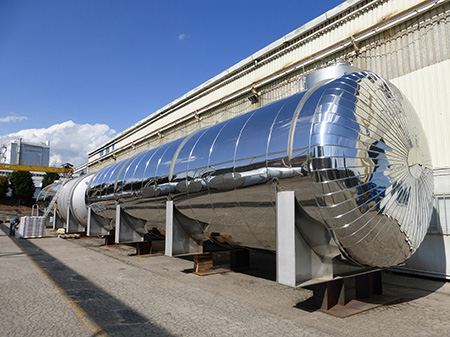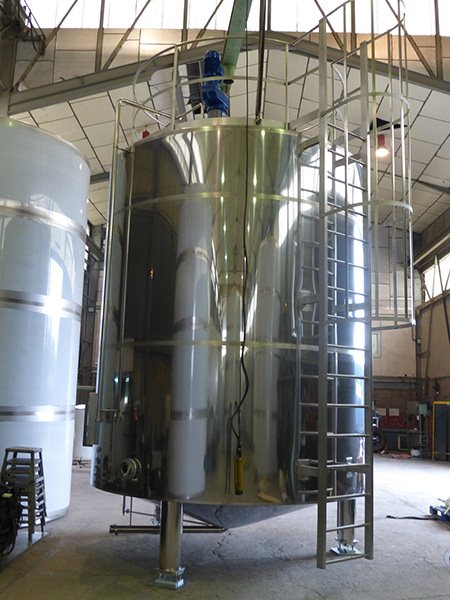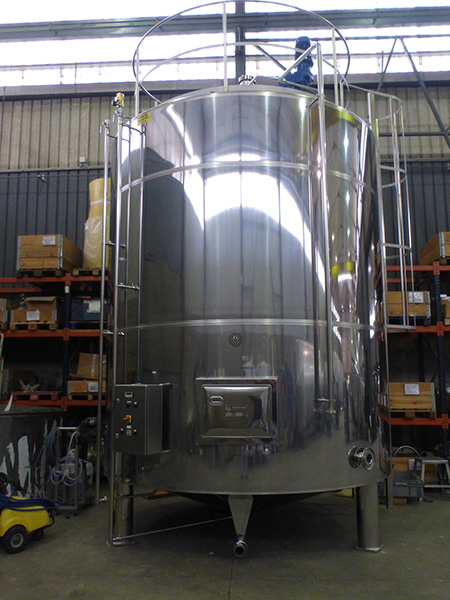
Designed for liquids that need to be kept at a stable temperature.
Description
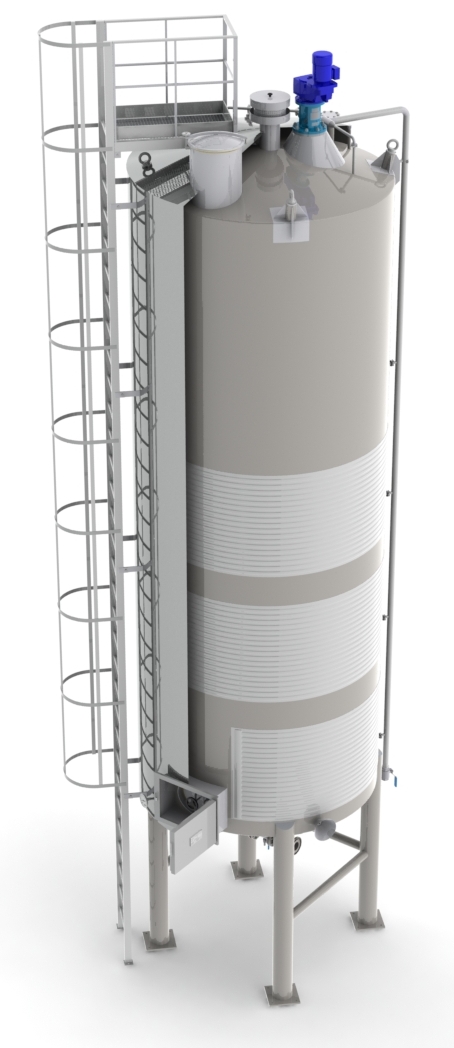
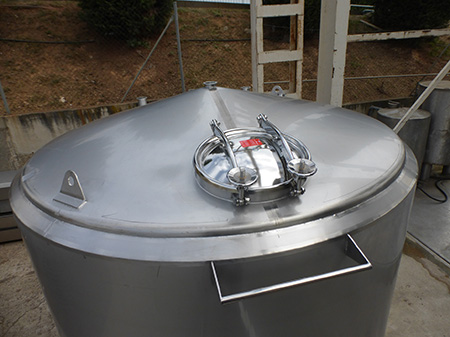
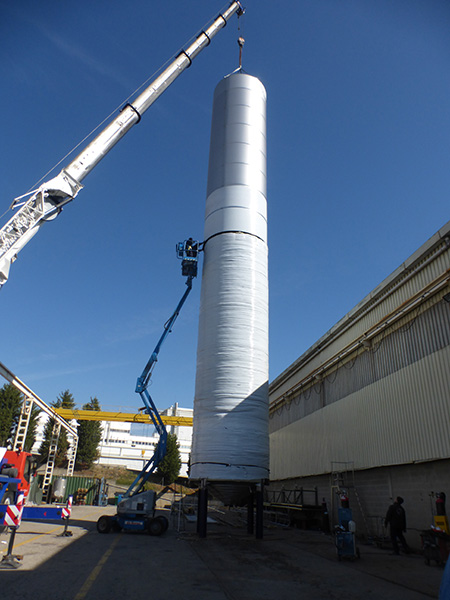
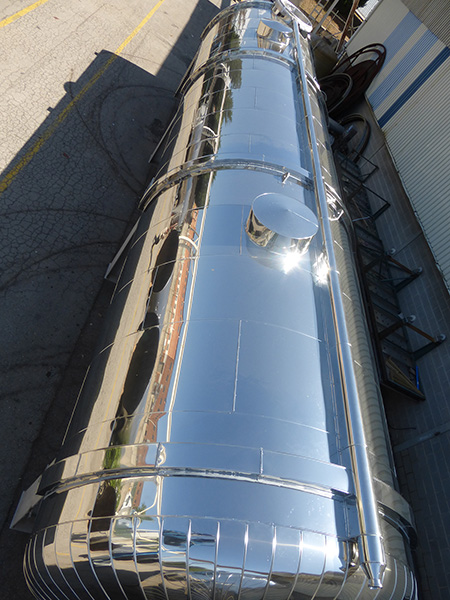
Tank designed to maintain and control the product’s internal temperature. In some cases, cooling/heating jackets are installed to bring the product to the desired temperature, and above all, external insulation keeps the temperature for a specified period of time.
Isothermal tanks are mainly used for storing products such as milk, juices, hot and cold water, and, in general, any type of liquid that needs to be kept at a stable temperature.
Features
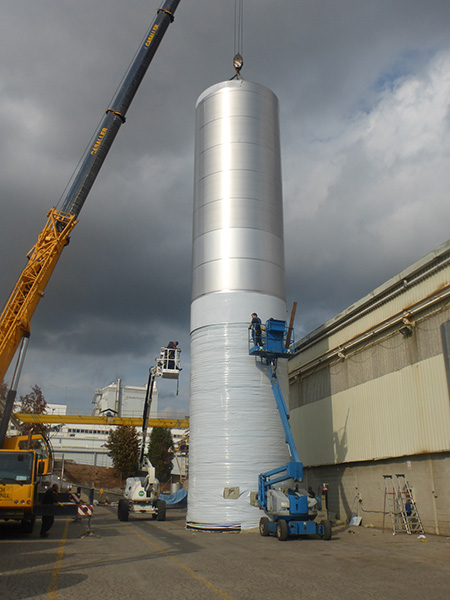
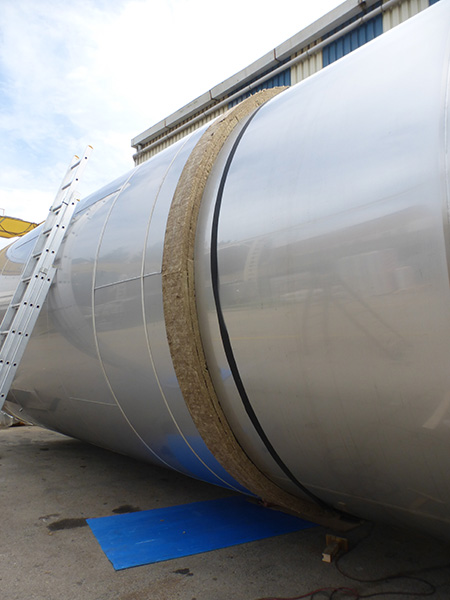
- The type of material (polyurethane, rock wool, etc.) will determine the insulation’s working time and efficiency, as will the thickness of the outer layer (40, 50, 80, 100, 120 mm, etc.).
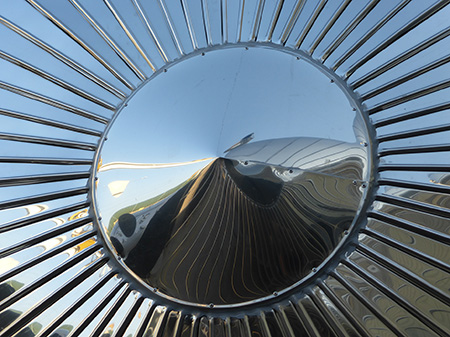
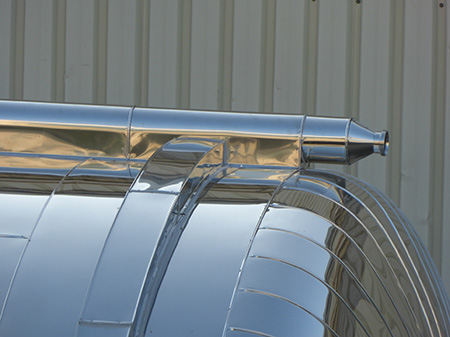
- To achieve an optimal airtight fit with the lowest possible heat loss, the insulation will have an outer cladding (stainless steel or riveted aluminium), which will also give the tank a more aesthetic appearance.
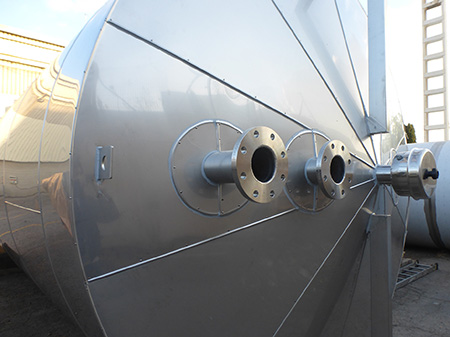
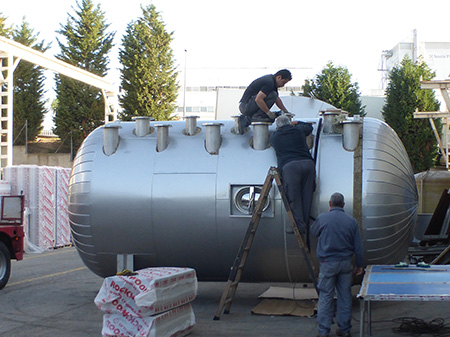
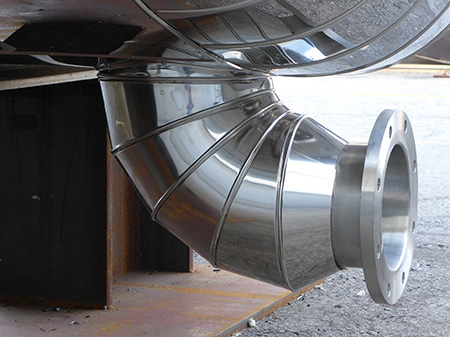
- The nozzles will be extended depending on the thickness of the existing insulation layer.
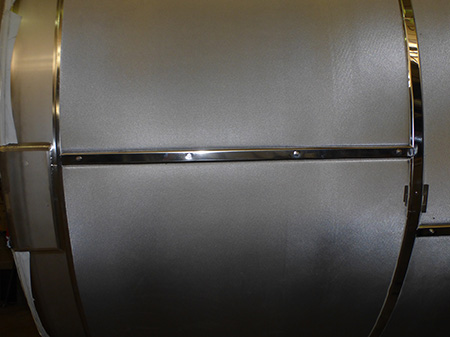
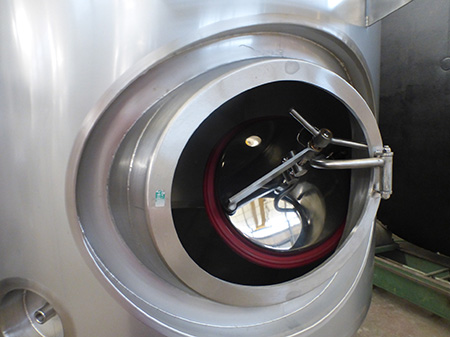
- Large openings will include an insulation frame together with a refrigerator-type door to prevent heat leakage.
- The most widely used material for insulating tanks, and the one that offers the most efficient properties and characteristics, is rock wool. The most efficient insulation blanket models (rock wool) are MT 3.1 and MT 5.1, with excellent thermal conductivity characteristics and an approximate density of 70 kg/m3 and 100 kg/m3 respectively. They are reinforced rock wool blankets with a galvanised steel wire mesh incorporated on one side and stitched with steel wire, capable of withstanding medium (MT 3.1) and high (MT 5.1) temperatures.
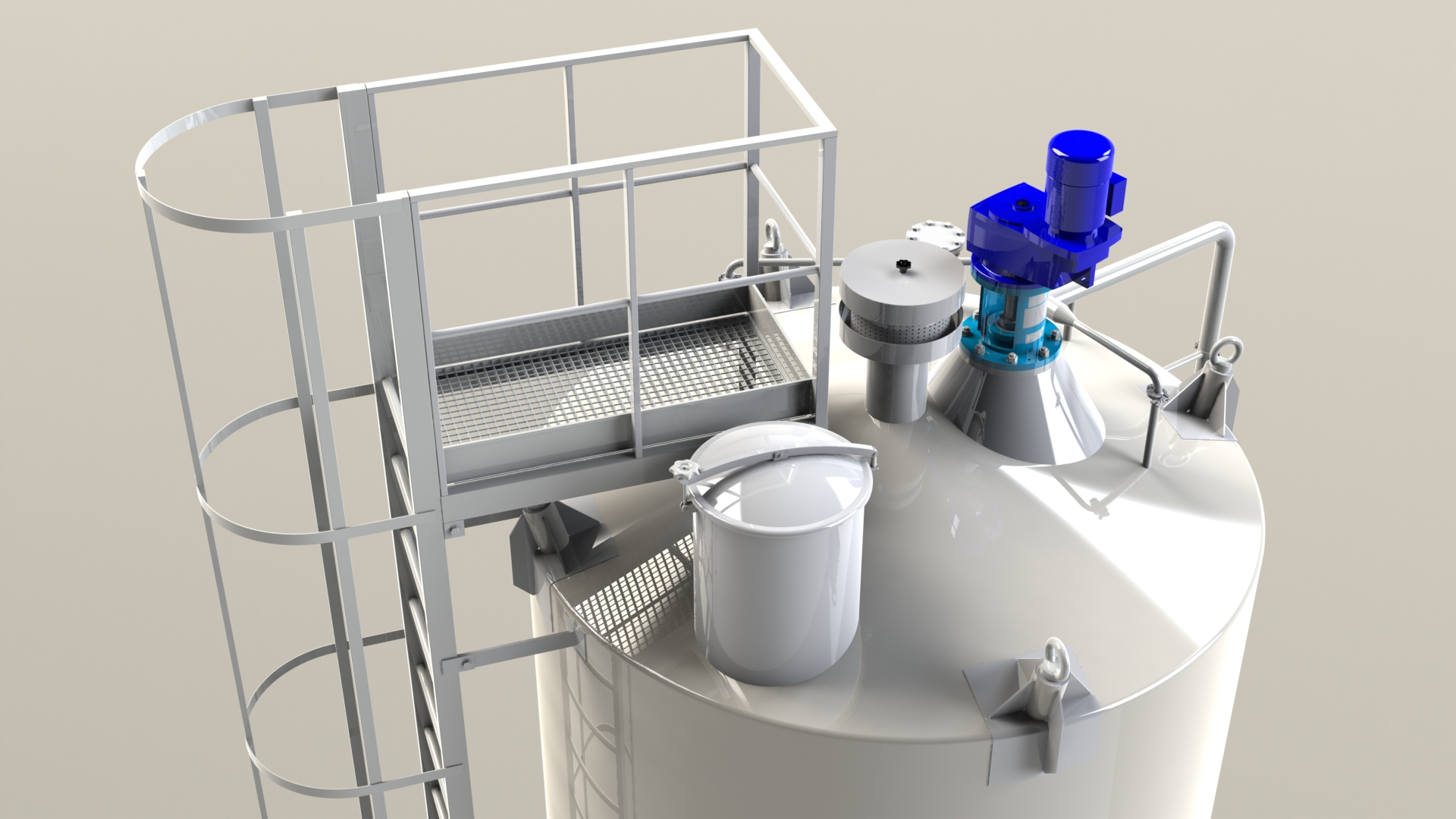
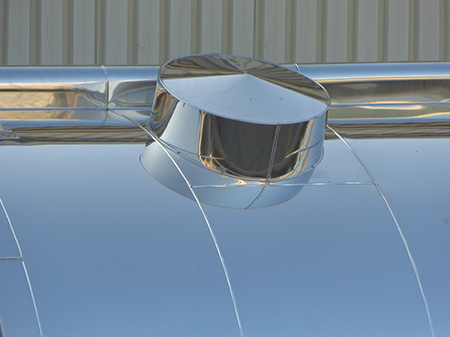
Some accessories include:- Insulation detail with removable cover for the manway.
- Insulation frame for manway access with a refrigerator-type door.
- Tank and accessories insulation detail. Roof insulation detail.
- End caps for perfect thermal sealing of nozzles. Nozzle insulation detail.